
Frequently Asked Questions
Filling in the gaps on tequila’s production, ingredients, and integrity.
Where is tequila made?
There are only five States of Mexico where tequila can be produced and be labelled as Tequila: Jalisco, Guanajuato, Michoacán, Nayarit, and Tamaulipas. Before 1978, tequila was unregulated and produced all around the world at varying levels of quality. In 1978, leading tequila companies worked to establish a globally-recognized appellation of origin (a D.O.) that legally ensures the entire tequila production process occurs within the defined region, and that its ingredients and characteristics are exclusively shaped by its natural environment.
Other products that are protected by a D.O. include Parmigiano Reggiano cheese and Champagne wine. Tequila was the first Mexican food or beverage protected and recognized as a D.O.
What are the rules of making tequila?
Tequila production is safeguarded by several factors, including region, legal requirements, and age.
For a spirit to be labeled as “tequila,” it must be made from blue Weber agave grown in one of five designated states of Mexico. Tequila is protected by a Denomination of Origin (D.O.), which certifies that both the agave and the production process come from within these specified regions. This designation also ensures that the spirit’s identity is tied to its terroir – the unique combination of soil, climate, and geography that shapes its character.
There are two types of tequila: Tequila and 100% Agave Tequila. 100% Agave tequila takes 100% of its sugar from the blue Weber agave plant, hence its name, while tequilas (otherwise known as Mixtos) are legally allowed to contain only 51% of blue Weber agave sugars – the rest may come from alternative sugar sources like grain, corn or cane.
There are also aging rules that define each expression.
- Blanco, also known as Silver or Plata, is an unaged spirit that is either not aged in barrels at all or rested for up to two months in pipones.
- Reposado is aged between two months and one year.
- Añejo must be aged for a minimum of one year, and a maximum of three years.
- Extra Añejo must be aged for a minimum of three years.
- Cristalino tequilas are aged tequilas that are then filtered to appear transparent in color.
How do you make tequila?
100% Agave tequila is made from the blue Weber agave plant, primarily grown in the region around Jalisco, Mexico.
Once agave plants reach maturity and hold enough sugar content (called Brix content), they are harvested by Jimadores – skilled farmers who extract the heart of the agave, or piña, by cutting off the sharp leaves with a razor-sharp blade. The piñas are then cooked to convert complex carbohydrates into fermentable sugars. Traditional cooking methods use brick ovens (hornos) to complete this process, while modern techniques like diffusers and autoclaves use steam and pressure (like a pressure cooker), which helps reduce time, water and energy usage and creates a different flavor profile.
After the agave is cooked, its sugar, or aguamiel, is extracted through a crushing process and then moved to distillation. This crushing process can happen via a roller mill or via a stone tahona wheel.
How a tequila is distilled and later, matured, significantly impacts its flavor profile. For example, Cuervo and 1800 Tequila use both copper pot stills and column stills in the production of their different tequilas, and only use new American or French oak barrels for aging. Some of their most premium expressions are finished in rare casks such as Cognac, Sherry, Single Malt and Port.
What is agave?
The agave is a succulent plant native to Mexico with tall, spiny leaves that protect the plant’s heart, or piña. Because of its leaves, many people believe it to be a type of Cactus, but it’s actually more closely related to the lily family (Liliaceae). The agave is a century plant, which means it only blooms once in its lifetime. All tequila is made using the blue Weber agave grown in one of the five protected regions of Mexico: Jalisco, Guanajuato, Michoacán, Nayarit, and Tamaulipas.
Can tequila only be made in Mexico?
By law, tequila can only be produced in specific regions of Mexico, mainly the state of Jalisco (home to the town of Tequila) and certain municipalities in Nayarit, Guanajuato, Tamaulipas, and Michoacán.
What are the different classifications of tequila e.g. Blanco, Reposado etc.?
- Blanco, also known as Silver or Plata, is an unaged spirit that is either not aged in barrels at all or rested for up to two months in pipones.
- Reposado is aged between two months and one year.
- Añejo must be aged for a minimum of one year, and a maximum of three years.
- Extra Añejo must be aged for a minimum of three years.
- Cristalino tequilas are aged tequilas that are then filtered to appear transparent in color
What is the NOM?
The Norma Oficial Mexicana (NOM) is an administrative entity connected to a tequila producer with a single or multiple distilleries, and it does not necessarily represent the distillery where it is produced. For example, Jose Cuervo has one NOM registered to the company (NOM 1122) that encompass all four of its distilleries (including La Rojeña 1, La Rojeña 2, 1800, and Los Camichines) and five tequila brands that are made there (Cuervo, Reserva de la Familia, Gran Centenario, 1800, Maestro Dobel, and Gran Coramino).
How long does tequila take to make?
Who invented tequila?
Cuervo, an 11th generation, family-owned Mexican company, was the first to farm agave for tequila production and the first to perform intensive cultivation. Jose Antonio de Cuervo founded the family business in 1758 when he bought land around Tequila and named it Solar de las Animas. The Cuervo family was granted the first license to distill by the King of Spain in 1795. Cuervo Tequila is the oldest tequila brand and one of the oldest spirits brands in the world, with the oldest distillery in the Americas called La Rojeña. That distillery is still operating and producing tequila, in the town of Tequila, Jalisco.
Who is Jose Cuervo?
Jose Antonio de Cuervo was the first producer of tequila. He obtained land from the King of Spain in 1758 and began producing tequila – all before Mexico became an independent republic. In 1795, his son, Jose María Guadalupe de Cuervo, began selling the very first Vino Mezcal de Tequila de Jose Cuervo after receiving the first official charter from the King of Spain to produce tequila commercially.
Today, Jose Cuervo is the oldest tequila company in the world and an 11th generation, family-owned Mexican company that is still run by the same family. The Cuervo family were granted the first license to distill by the King of Spain in 1795 and were the first tequila producers and first farmers of agave for mass tequila production.
What is La Rojeña?
La Rojeña is the oldest active tequila distillery in Latin America, and the oldest distillery in the Americas, built in 1812 by Cuervo Tequila. To this day, La Rojeña is still operating and producing tequila, in the town of Tequila, Jalisco.
What is a diffuser?
A diffuser is a machine that uses just hot water and steam to pressure wash shredded agave fibers to remove the sugary liquid from the fibers. That liquid is then cooked via steam to separate the compounds for the fermentation process.
Diffusers are an efficient production method designed to help lower energy consumption and increase yield from every agave plant. They reduce water usage by more than 50%, use 46% less energy and 20% less agave. Diffusers are utilized for some tequilas and are a critical method in differentiating flavor, and as a more sustainable solution to producing tequilas.
Is tequila made sustainably?
Some tequila producers are leading the way in long-term sustainability. Treating water stillage from the production of tequila is critical in order to keep the surrounding environment safe from pollution. Cuervo is one of the few tequila companies that has invested in a stillage treatment plants on site, and can process about 2 million liters of stillage per day to make it safe to return to the water system. The absence of proper stillage treatment at many facilities continues to pose a serious environmental concern within the tequila-producing region.
In addition to minimizing environmental impact at the production level, sustainable tequila also depends on responsible farming practices—both in how the land is managed and how agave workers are supported. 1800® Tequila, for example, reuses, recycles, and repurposes 100% of the agave plant, transforming agave waste into compost for their agave fields. The brand also supports growers with industry-leading wages and long-term contracts, advocating at both governmental and industry levels to protect the livelihoods of agave farmers and ensure the long-term health of the industry.
As the category continues to evolve, many tequila producers are strengthening their partnerships with local communities and investing in more regenerative approaches to agave cultivation, helping to protect both the people and the land that make tequila possible for future generations.
What is the CRT?
The Consejo Regulador del Tequila, or CRT, is the official regulatory body that oversees the production of tequila and enforces standards of quality and authenticity.
The CRT ensures tequila is produced in designated regions of Mexico, certifies compliance with official Mexican standards (NOMs), approves every barrel of tequila made, and conducts inspections and testing for quality and labeling worldwide. It is a non-profit organization with all distilleries as equal members with equal voting rights.
What are additives in tequila?
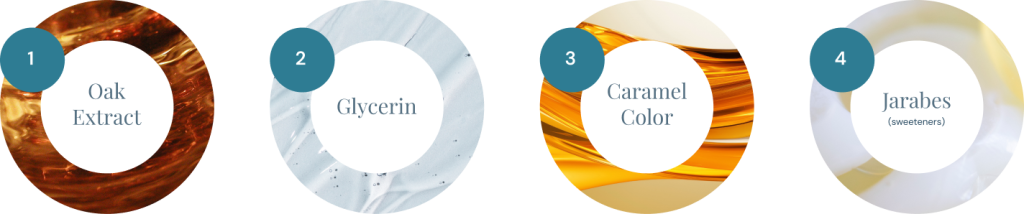
The most common additives used in both tequila and across almost all spirits are caramel extract for color standardization, oak extract for flavor standardization, glycerin for mouthfeel, and Jarabes or sweeteners for flavor. As a regulated industry, Tequila is only allowed to include up to 1% of additives in 100% agave tequila. They are not unhealthy, and this regulated process has shared the same standard across other spirits categories for decades, including wine, Rum, Vodka, Cognac and Scotch.
Any time an aged tequila touches a barrel as part of production it may include compounds that can be imparted through the wood – for example an ex wine or Bourbon cask will have remnants of the spirit it housed and will show up as an additive in a lab test. There could also be the need to add additives for color correction, flavor standardization or mouthfeel, and the permitted use of these can vary from batch to batch. Flavored tequilas will use additives to create the flavor profile.
What kind of barrels are used to age tequila?
For Reposados onwards, tequila is aged in barrels. These can be new barrels, like American or French oak, or used barrels like American Bourbon barrels. Depending on the expression, each tequila requires a varying amount of aging time, and some products are finished in a different barrel for additional flavor. These finishing barrels can be Cognac, Sherry or Port casks.
For example, Cuervo Tradicional Añejo is aged in new American oak barrels for a minimum of a year, then finished in Bushmills Irish single malt whiskey barrels for a unique and complex flavor. Reserva de la Famila Extra Anejo is aged in new American and French oak barrels, and then blended with older reserves of Extra Anejo tequila from the family cellars.
What is additive-free tequila?
Additive-free tequilas are not recognized as an official segment in the category, nor is there an official additive-free certification put in place by regulators because no formal testing has taken place with any producers. As a regulated industry, Tequila is only allowed to include up to 1% of additives in 100% agave tequila. The most common additives used in both tequila and across most aged spirits are caramel extract for color standardization, oak extract for flavor standardization, glycerin for mouthfeel, and Jarabes or sweeteners for flavor.
Tequilas who describe their product as “Additive-Free” do not use any enhancers in their production process, however they may use barrels for their aged tequilas that will contain compounds and additives. That is why the current additive-free communication is misleading to consumers. The moment a spirit touches a barrel, it is difficult to use the term “additive-free” as the barrel imparts compounds from the wood/cask or the spirit/wine it was used for before tequila was finished within.
It is almost impossible to test for additive usage across each batch and bottle of tequila, which leaves the reliance upon the producer to disclose their methods. At present, there is no official additive-free label certification or lab test put in place by regulators to verify a tequila is additive-free for the American consumer. There are over 3,000 additives listed by the FDA, and these additives would need to be tested for in order to meet consumer needs. Third-party organizations that are offering brands “additive free” labelling do not have the large-scale infrastructure, financing or technical capabilities to regularly test batches to determine if a product is additive free. Currently there isn’t an official governing body that is validating those claims.